A slow crank, a click or a dash that dies after a jump: how a Class 8 driver can tell batteries, starter and alternator apart before calling.
By TRT Road Service
Start with the sound and the lights. A slow crank points to weak batteries or bad cables. A single click or silence points to the starter circuit or its wiring. A truck that starts after a jump and then dies again points to the alternator. Check those clues, then call TRT Road Service at (928) 577-1496 and tell us what you saw.
How the three parts work together
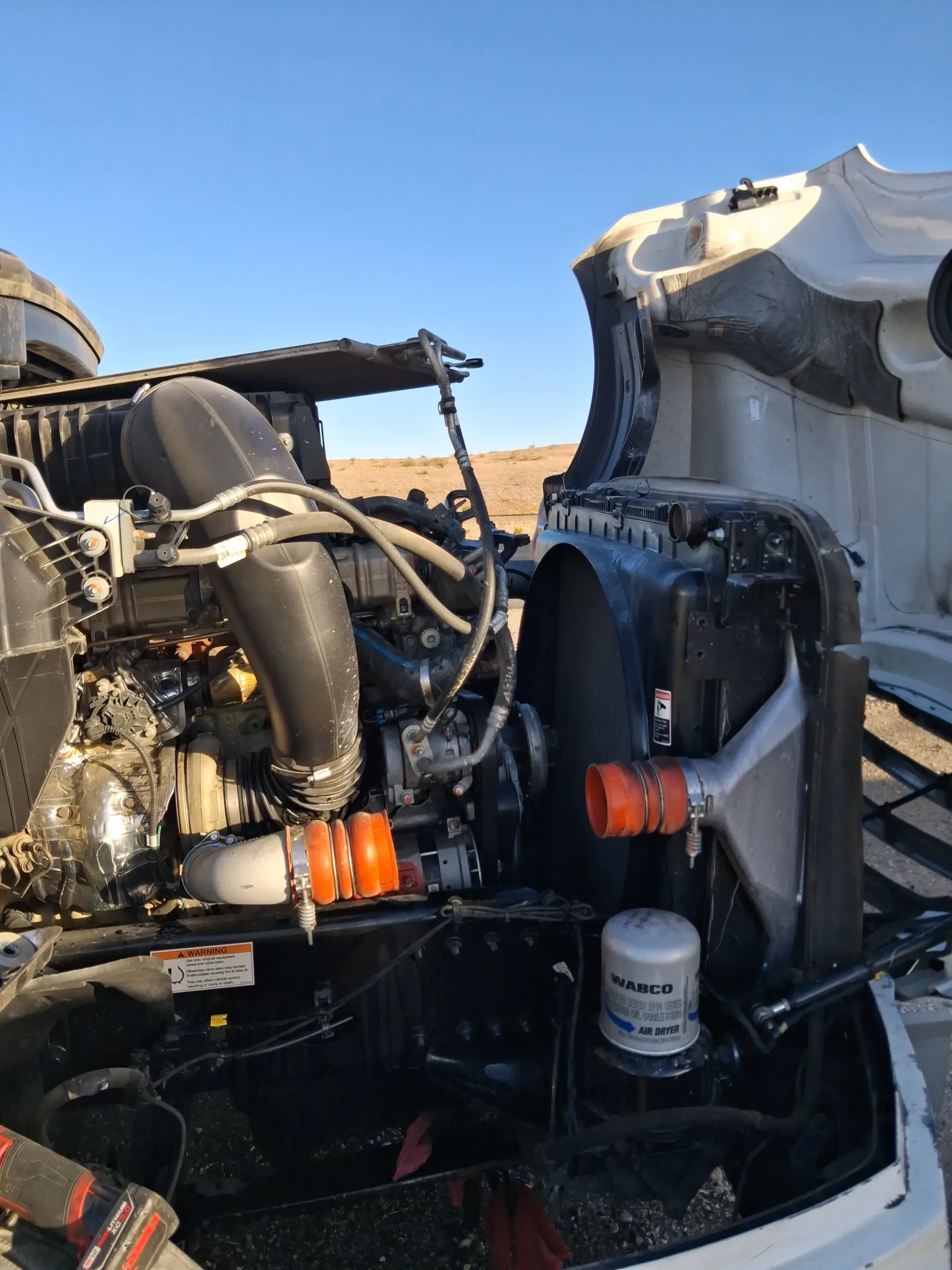
Your batteries store the power. The starter uses a large burst of that power to turn the engine over. The alternator recharges the batteries once the engine runs. Each part depends on the other two.
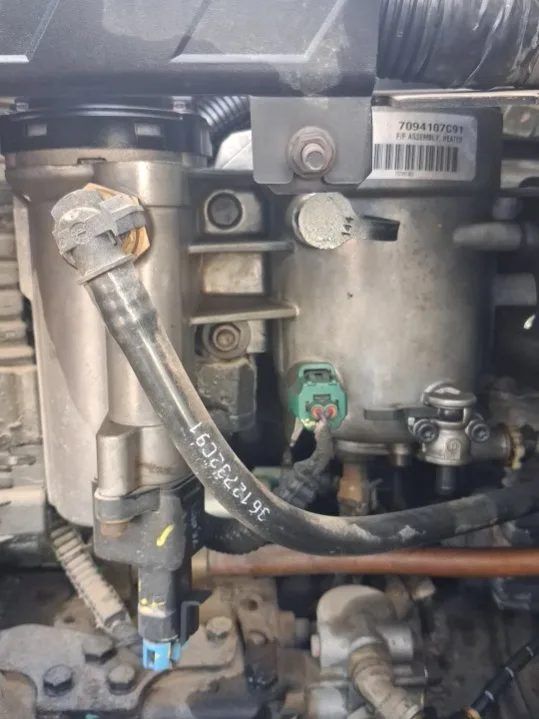
That is why the three failures look alike. A weak battery makes a good starter crank slowly. A failing alternator leaves the batteries weak, so the truck dies later. A loose cable makes a good starter click.
So the order matters. Delco Remy, a maker of heavy-duty starters and alternators, tells technicians to begin at the batteries before they blame the starter. We use the same order.
Slow crank, click or silence each point to a different place. Source
Clue 1: What the crank sounds like
The sound tells you where to look first. Delco Remy sorts starting complaints into three groups: slow crank, click with no crank, and no click with no crank.
Slow crank
The engine turns, but slowly and with effort. Check the batteries and the cables first. Delco Remy says that if the battery and cable checks are within specification and the truck still cranks slowly, the starter is the problem.
Click, but no crank
You hear one click or a fast clicking. The engine does not turn. Delco Remy says to check the control circuit. If the starter has no Integrated Magnetic Switch, a mechanic runs a voltage drop test on the truck’s control circuit. If it does have one, the mechanic confirms the control circuit is sending voltage to that switch.
No click and no crank
You turn the key and hear nothing. Delco Remy says power is not being sent to the solenoid. That makes the starter motor very unlikely to be the cause. Look at the battery cables, the battery switch if your truck has one, and the key circuit.
Clue 2: Does it start, then die?
This clue points the other way. The truck starts, maybe after a jump, runs for a while and then dies. The dash may dim or the lights may fade as it runs.
That pattern says the batteries are not getting recharged. The alternator, its belt or its wiring may be at fault. A jump can get you started, but it does not tell you why the batteries went flat.
Do not count on a second jump to carry you to the next stop. If the charging system is the cause, the new charge drains again.
What a driver can check in a few minutes
You do not need tools for a first look. Stop in a safe spot, set the brakes and look.
- Look for white or green crust on the battery posts and cable ends.
- Look for cables that are loose or hanging.
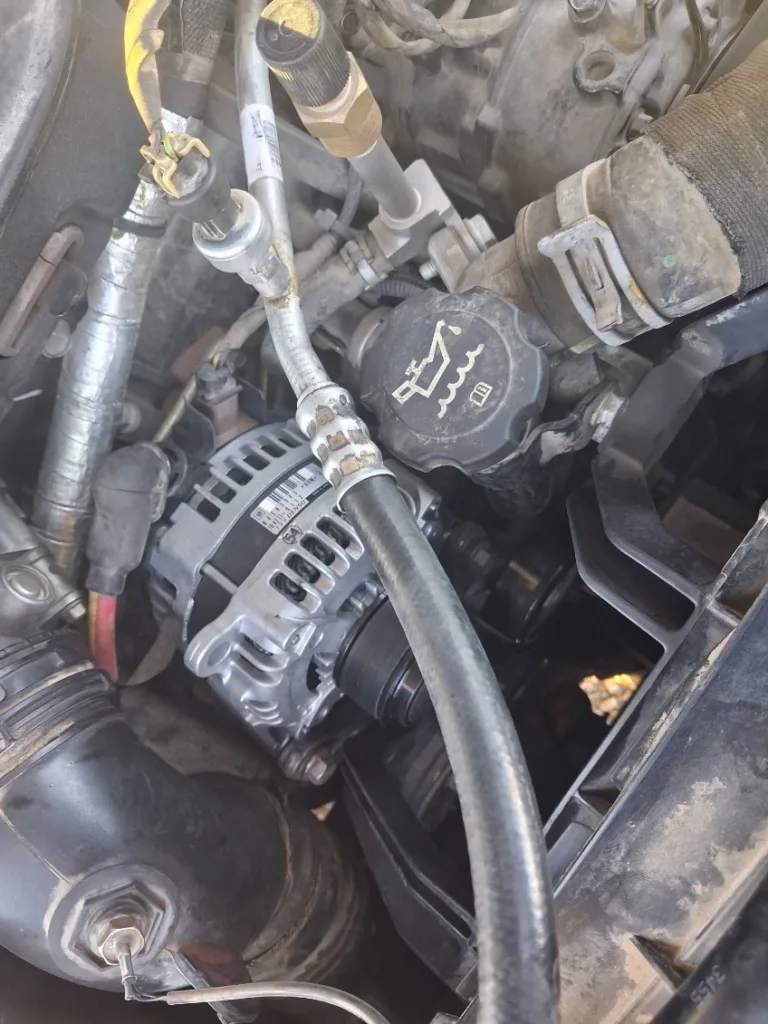
- Look at the alternator belt for a loose, frayed or missing belt.
- Look for a ground strap that is broken or rusted through.
Delco Remy’s alternator checklist starts the same way. Its first step is a visual inspection under the hood of the belt, the connections and the alternator mounting.
Take care near the batteries. Wet lead-acid batteries can make potentially explosive mixtures of hydrogen and oxygen, according to battery maker Discover Battery. The same page says to keep sparks, flames and cigarettes away and to wear safety glasses and a face shield.
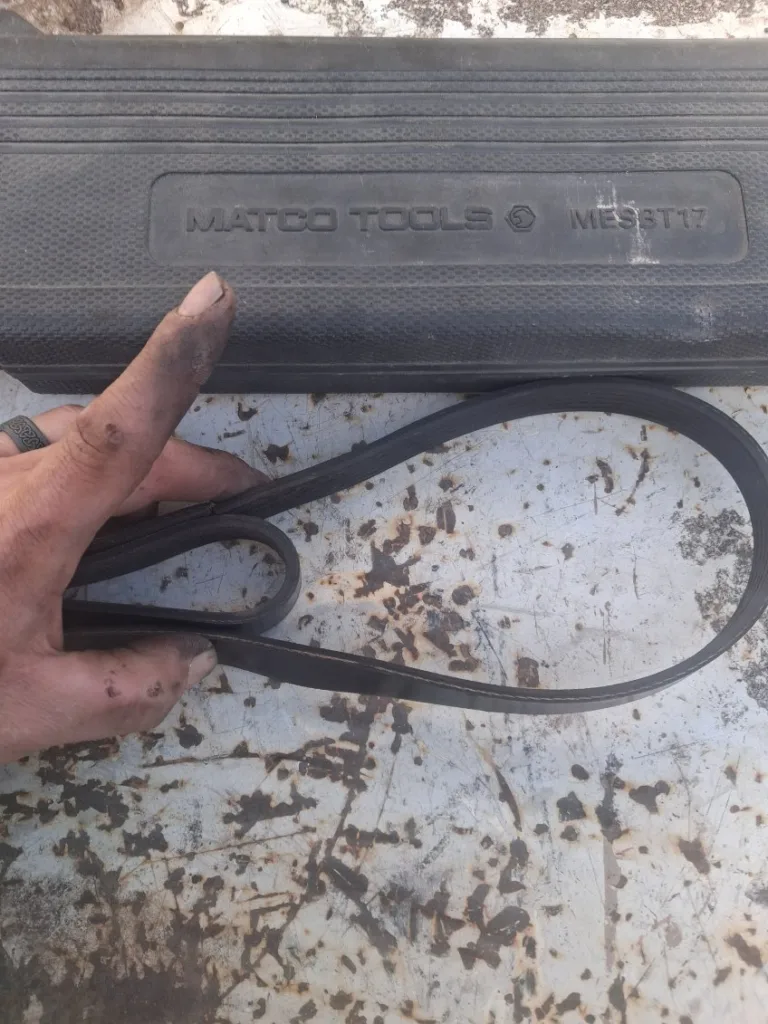
What to leave alone
Some moves make a small problem bigger.
- Do not keep cranking. Each try drains the batteries further.
- Do not touch the starter terminals with a screwdriver or other tool to force a start. A spark near a battery is a real danger, and a slip can hurt you.
- Do not swap parts by guessing. A new starter on a bad cable still clicks.
- Do not buy a new alternator because the batteries are flat. Flat batteries can have another cause.
What a mechanic measures that you cannot see
Two tests settle most of these calls. One reads the voltage while the engine runs. The other finds power lost inside the cables.
The running-voltage test
Delco Remy’s alternator procedure has the technician measure voltage at the battery with the engine running. If the reading is 13.8 volts or higher, the next step is to test the alternator’s output. A lower reading sends the technician to measure at the alternator’s B+ terminal. If that reading is 13.8 volts or higher, the procedure calls for a voltage drop test.
The voltage drop test
Voltage drop is power lost on the way through a cable or a connection. Delco Remy gives 0.500 volts maximum total loss on a 12-volt system. That figure covers the whole circuit, not one cable. Delco Remy lists four common causes: loose connections, corrosion, wrong-size cables and badly crimped connectors.
That is why a cable can look fine and still stop a truck. A small loss at the starter post can mean a click and no crank.
Delco Remy’s check at the battery with the engine running. At or above it, the next step is to test alternator output. Below it, the technician measures at the alternator’s B+ terminal. Source
The most total loss Delco Remy allows across a 12-volt circuit, not per cable. Source
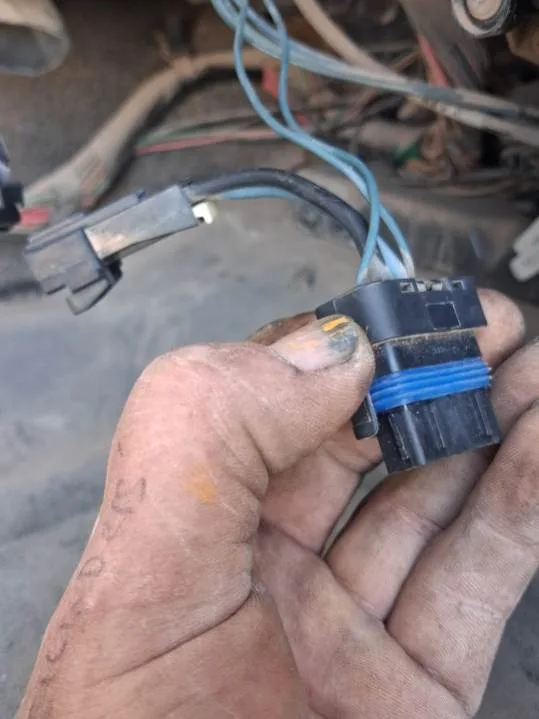
When it is safe to keep driving, and when it is not
We found no authoritative source that gives a safe distance for a truck with a failing charging system, so we do not give one. Treat the batteries as your only power.
Do not assume a truck that started will keep running. If it dies on the road, use your hazard lights and get to a safe shoulder.
If you see a charging warning on the dash, treat it as a real fault. Pull off where it is safe and call.
How TRT diagnoses it at your truck
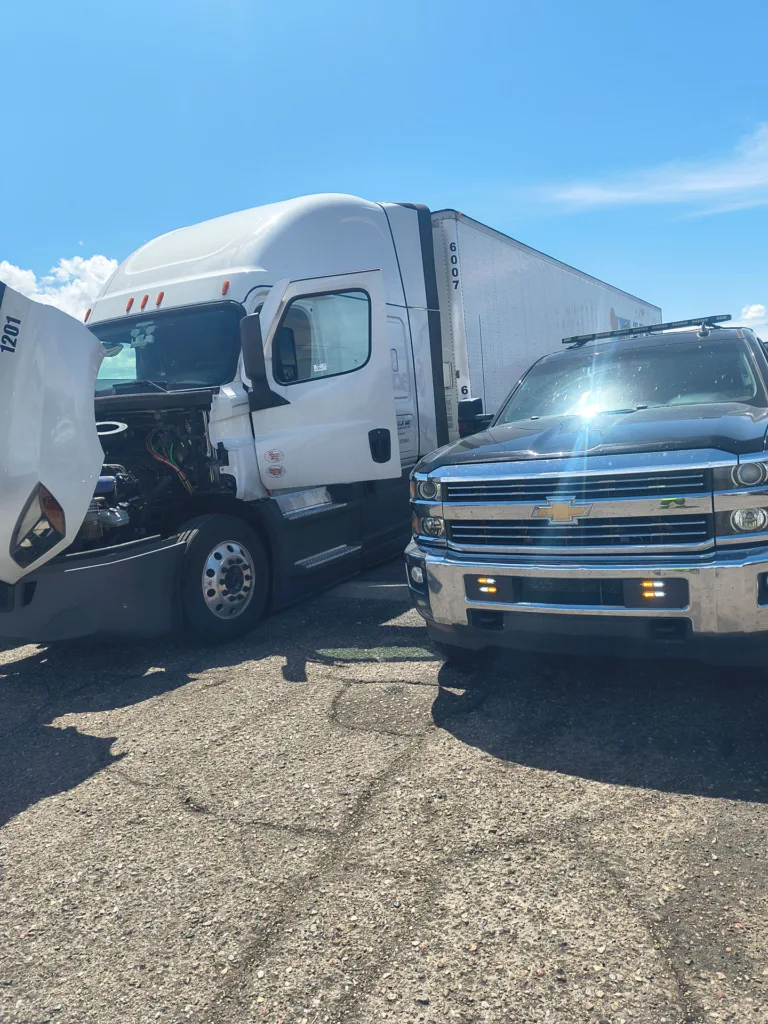
TRT Road Service is a mobile diesel repair and heavy-duty diagnostics business. Our mechanics come to your breakdown location. There is no shop drop-off. Tennessee, the veteran owner, personally handles most jobs.
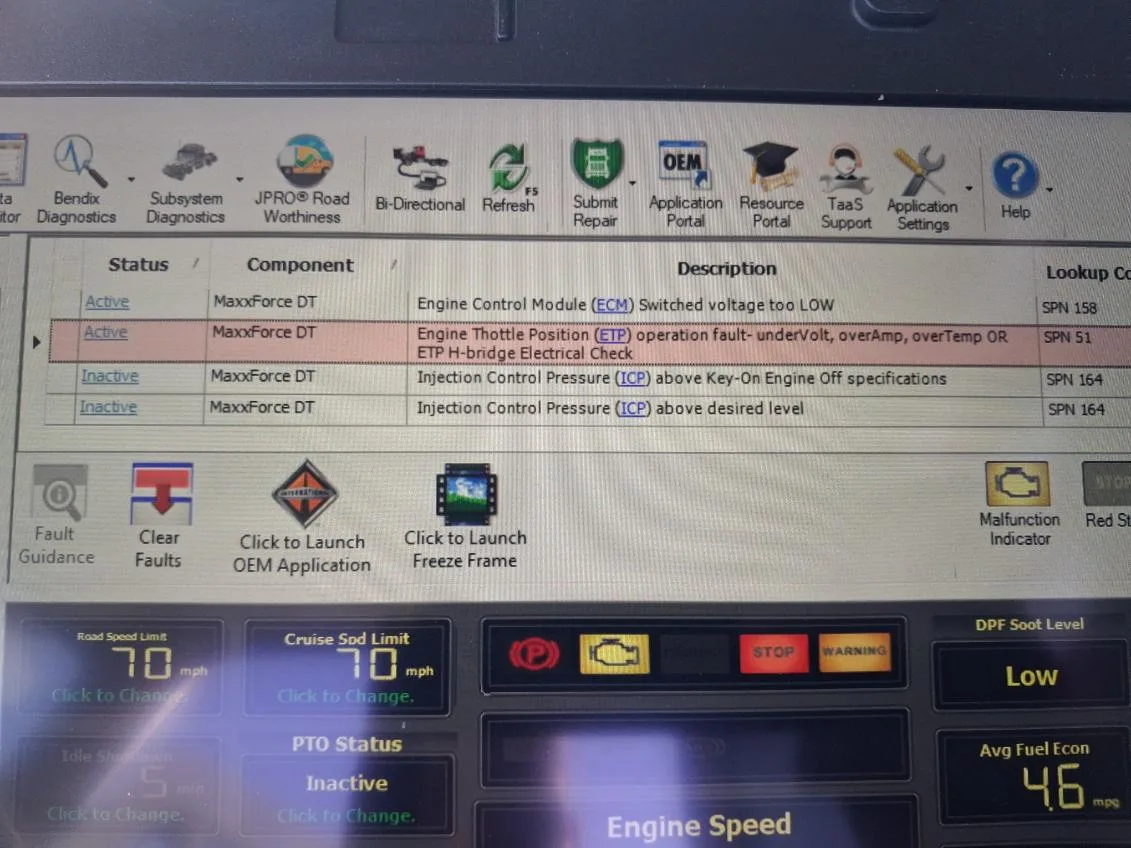
We read fault codes on site with JPRO Professional, a dealer-level diagnostic tool. Electrical work, including alternators and starters, is part of what we work on. Our mobile truck electrical and no-start repair page explains that service.
We serve the I-40 corridor from Seligman through Kingman and Needles to Barstow. We also serve AZ-95 from Searchlight through Bullhead City, Fort Mohave and Mohave Valley to Parker. TRT is open 24 hours a day, 7 days a week.
If the truck will not start at all, our earlier guide on roadside no-start triage covers the other causes to rule out first.
TRT’s mechanics come to your breakdown location. No shop drop-off.
Frequently Asked Questions
Quick answers to the questions people ask before they call or book.
Can I jump a Class 8 truck to find out which part failed?
A jump can show whether the batteries are the problem, but it does not find the cause. If the truck runs and then dies again, suspect the alternator. Follow the battery maker’s instructions and your truck’s manual, and keep sparks away from the batteries.
The starter only clicks. Is the starter bad?
Not always. Delco Remy says a click with no crank sends the technician to the control circuit first. On a starter with no Integrated Magnetic Switch, that means a voltage drop test. Bad cables and weak batteries often cause the click. A mechanic can tell the difference by measuring.
Does a weak battery always mean a bad alternator?
No. Batteries wear out on their own. But replacing batteries without checking the charging system can leave the cause in place. Delco Remy’s alternator procedure inspects and tests the batteries before it blames the alternator.
Will my truck have to go to a shop?
TRT is mobile only. Our mechanics come to where your truck stopped. We do not run a shop drop-off.
What do I tell the mechanic when I call?
Tell us the sound you heard, whether the dash lights came on, and whether the truck ever started after a jump. Give us your location on I-40 or AZ-95.
Stopped on the road? Call before you try again
Every failed try drains the batteries a little more. Note the sound, check the cables and the belt, then stop cranking. Time stopped is money lost.
By TRT Road Service, mobile diesel repair and heavy-duty diagnostics on I-40 and AZ-95.
Call TRT Road Service
Call TRT Road Service at (928) 577-1496 and tell us the sound and your location. You can also reach us through our contact page.
TRT Road Service