A crank/no-crank triage guide for truck drivers: what clicking means, battery vs starter vs alternator, and what a mobile mechanic fixes on-site.
A truck that won’t start at a rest stop is a special kind of stuck. You’re not broken down in traffic — no drama, no shoulder — just a rig that was fine last night and is now a very large paperweight between you and your delivery window.
The good news: no-starts are among the most roadside-fixable failures in trucking, and you can narrow the cause down from the driver’s seat before you ever make a call. Here’s the triage.
First Split: Does It Crank?
Everything starts with one question — when you turn the key, does the engine physically turn over?
It cranks but won’t fire. The starter circuit is doing its job; the engine isn’t getting what it needs to run. Think fuel (gelling isn’t the issue out here, but filters, leaks, and air in the fuel system are), air, or an electronic shutdown — a tripped kill switch, an anti-theft interlock, or an ECM that isn’t waking up.
It doesn’t crank at all. Now you’re in the electrical chain: batteries, connections, starter, or the ignition circuit that ties them together.
It clicks. Rapid clicking usually means the batteries can’t hold the starter’s load — classic low-voltage behavior. A single hard clunk with no rotation points more toward the starter itself or a dead spot in it.
That one observation — cranks, clicks, or silence — cuts the problem space in half before anyone touches a tool.
Quick Checks From the Seat (and the Ground)
Without turning yourself into the mechanic, a few things are worth thirty seconds:
- Dash and gauges. Do you have full electrical power, dim lights, or nothing? Dim everything says batteries; full power with no crank says the problem is past the batteries.
- Battery box. Look — don’t wrench. Corroded or visibly loose terminals, a smell of sulfur, or a swollen case are all findings worth reporting to dispatch.
- Kill switches and neutral. It’s not embarrassing until you’ve paid a service call for it: confirm the battery disconnect, any auxiliary kill switch, and that the transmission is genuinely in neutral with the clutch fully down.
- What happened before. Slow cranking the last few mornings? Lights flickering last night? A charging-system warning you were going to deal with at the house? That history is diagnosis gold.
Battery, Starter, or Alternator? Why It Matters
Drivers tend to say “dead battery” for all three, but they’re different repairs with different urgency:
Batteries fail from age, heat, and vibration — and desert heat is brutal on them. A failing bank might take a boost and get you moving, but if the batteries are cooked, the same no-start is waiting at your next stop.
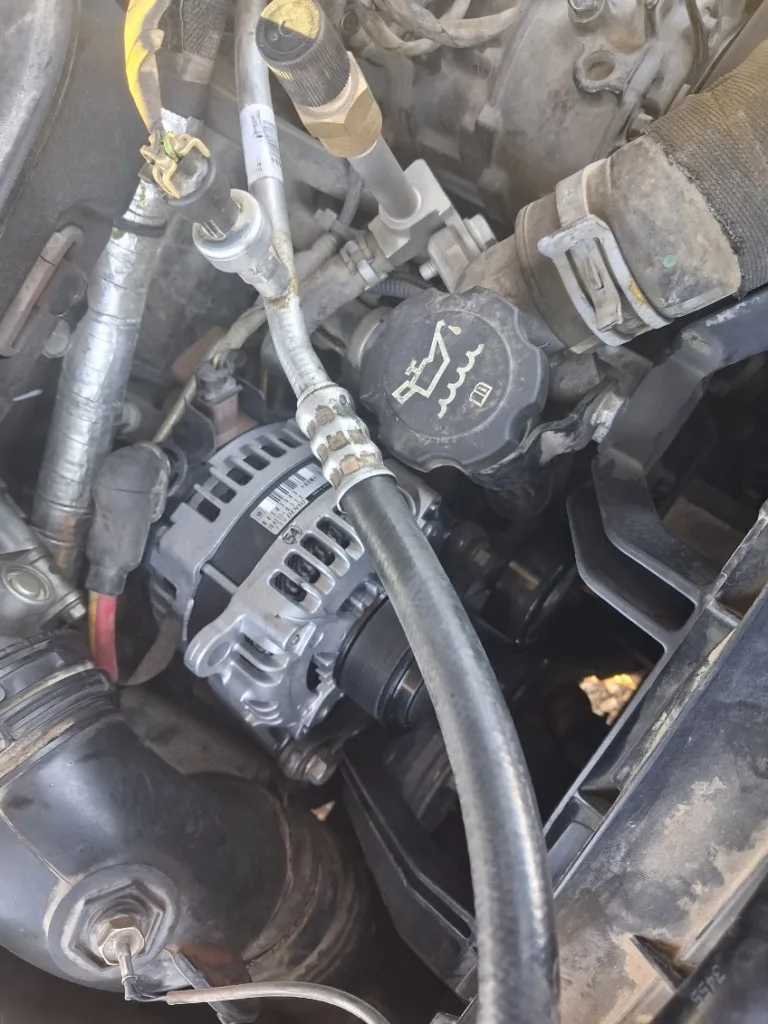
The alternator charges the batteries while you run. When it dies, the truck runs on stored battery power until that’s gone — which is why an alternator failure often looks like a battery failure a hundred miles later. If the volt gauge was sagging before the no-start, say so when you call.
The starter takes the abuse of every start cycle. Heat soak, worn brushes, and failing solenoids produce the single-clunk or intermittent no-crank pattern — and no amount of jump-starting fixes a dead starter.
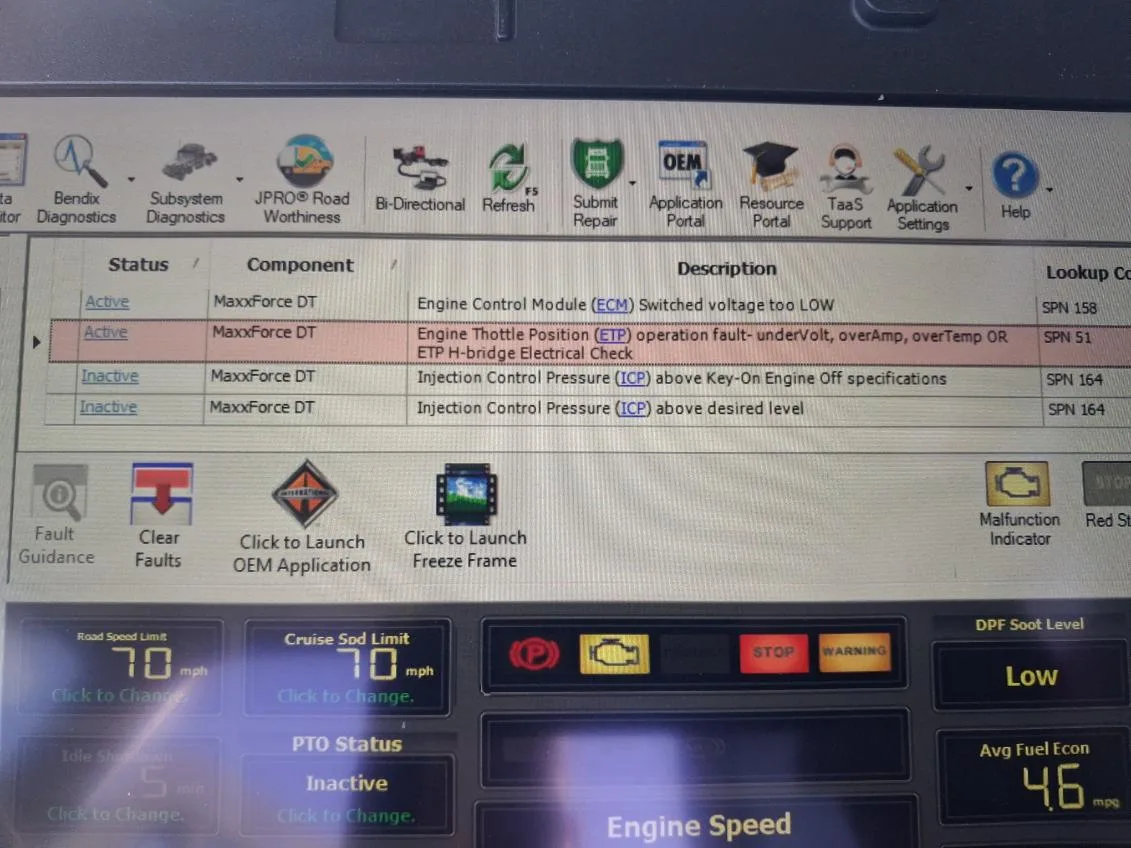
A mobile mechanic with dealer-level diagnostics doesn’t have to guess between them: cranking voltage, charging output, and circuit faults can all be measured on-site, and the ECM’s stored codes often name the culprit outright.
What Gets Fixed at the Roadside
This is the bread and butter of electrical and no-start repair on TRT’s corridors — no-starts are among the most common calls in the Seligman area, and most of them end with the truck driving away:
- battery testing and replacement, terminals and cables included
- alternator diagnosis and replacement
- starter replacement
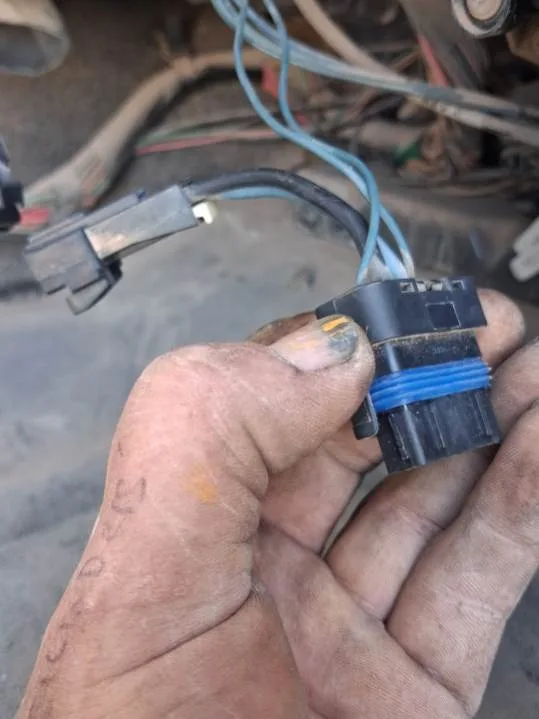
- wiring, connector, and ground-strap repairs — vibration and heat chew through these out here
- ECM communication and interlock faults traced with proper diagnostic software
All of it comes to you — mobile diesel repair is mobile-only, dispatching straight to the rest stop, truck stop, or shoulder where the truck decided to quit. Whether you’re at the Love’s in Kingman or a pull-out on US-95, the workflow is the same: call, describe, get diagnosed, get moving.
What to Tell Dispatch
- Where you are — rest stop or exit name, highway, direction.
- Cranks, clicks, or silence — the first-split answer above.
- What the dash shows — full power, dim lights, warning messages, or nothing.
- The lead-up — slow starts, flickering lights, charging warnings, or “it was perfect yesterday.”
- Truck, engine, and timeline — make, engine family if you know it, and how hard your delivery window is.
Frequently Asked Questions
Quick answers for the questions homeowners ask before they call or book.
It clicks fast when I turn the key. Is that the starter?
More often it’s the batteries — rapid clicking is the starter relay chattering on low voltage. A single hard clunk points more toward the starter itself. Either way, report the sound; it steers the diagnosis.
Can’t I just get a jump from another driver?
Sometimes, and sometimes that’s fine. But heavy-truck battery banks carry serious current, a boost doesn’t fix the reason the bank went flat, and if the alternator is the real problem you’ll be doing this again in a hundred miles — somewhere worse.
Do you handle this at night?
Yes — dispatch is 24/7, and overnight no-starts at rest stops are routine calls, not exceptions.
What if it turns out to be something bigger?
Then you’ll know from an on-site diagnosis instead of a guess. If a failure genuinely needs a shop, you hear that before committing to a tow — not after.
Stuck Right Now?
Run the triage above, then call TRT Road Service at (928) 577-1496 — 24/7 mobile electrical and no-start repair across the I-40 and AZ-95 corridors. Not urgent? The contact page is always open.
TRT Road Service