Water or oil in your air tanks often points to a worn air dryer. Learn the signs, what to check, and when to stop driving and call a mobile mechanic.
By TRT Road Service
Often, yes. Water at your tank drains often means the dryer cartridge is worn out or the dryer is not purging. Bendix’s air dryer data sheet lists both as causes of water in the reservoirs, along with others. If your low-air warning is on, park the truck. If not, drain the tanks, look at what comes out, and call a mechanic.
What the Air Dryer Does and Why Moisture Still Gets Through
Your compressor pushes air into the brake system. Bendix says that air “often includes contaminates such as oil, oil vapor, water, and water vapor.” The air dryer sits between the compressor and the tanks. Bendix says its job is to remove those contaminants “before they enter the brake system.”
Two facts matter here. Oregon’s driver manual says compressed air “usually has some water and some compressor oil in it.” It calls that bad for the air brake system. The same manual warns that water can freeze and cause brake failure.
So the dryer is there to keep that water and oil out of your tanks, lines and valves. When it fails, they get in.
Compressed air usually has some water and some compressor oil in it, which is bad for the air brake system. Source
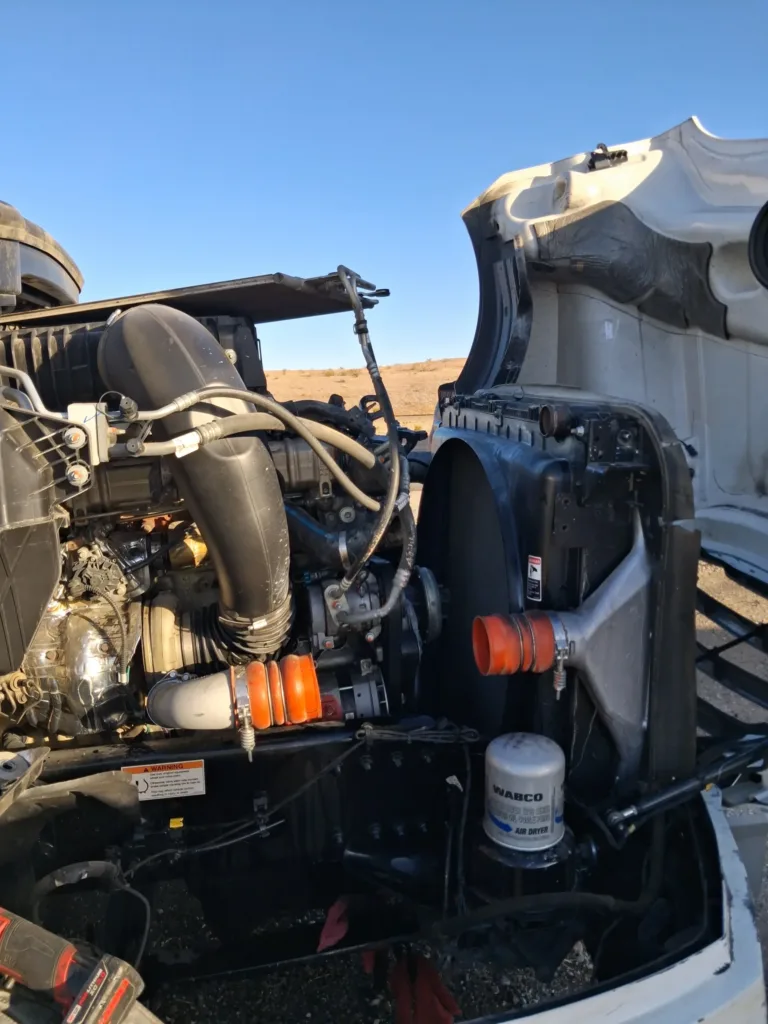
Signs the Air Dryer Is Failing
Look for these signs. They come from the drain test, your gauges and the dryer itself.
- Water at the tank drains. This is the clearest sign. Bendix says to check by opening the reservoir drain valves. If moisture is present, it says the cartridge “may require replacement.”
- More than traces of water. Bendix says to change the cartridge sooner if “more than just traces of moisture” show up when you drain.
- A dryer that is not purging. Bendix’s troubleshooting chart lists this as a cause of water in the reservoirs.
- A purge valve that leaks. Bendix lists a leaking purge valve under “constant exhaust of air” at the purge valve or trouble building pressure.
- A faulty delivery check valve. Bendix lists this under the same symptom.
- Damaged lines near the dryer. Bendix says to look for chafed or broken air lines.
Oil can show up with the water. The Trucker reports that Bendix says oil “can deteriorate seals, cause leaks and damage valves and brake chamber diaphragms.”
One sign can mislead you. Bendix says small amounts of water can build up after a big swing in conditions over one day. It calls small amounts normal in that case. Recheck before you blame the dryer.
Water at the reservoir drains may mean the dryer cartridge needs replacing; change it sooner if more than traces of moisture show. Source
What to Check at the Roadside
You can learn a lot in a few minutes without tools.
- Look at the gauges. Federal rules require an air pressure gauge and a low-air warning on air-braked trucks (49 CFR 393.51).
- Open every tank drain. Federal rules say each reservoir needs a drain valve. 49 CFR 393.50(d) says it “can be manually operated.” Bendix says the moisture check is done at these drain valves.
- Note what comes out. Dry air is good. A splash of water needs a recheck. A steady flow of water, or oil mixed in, needs a mechanic.
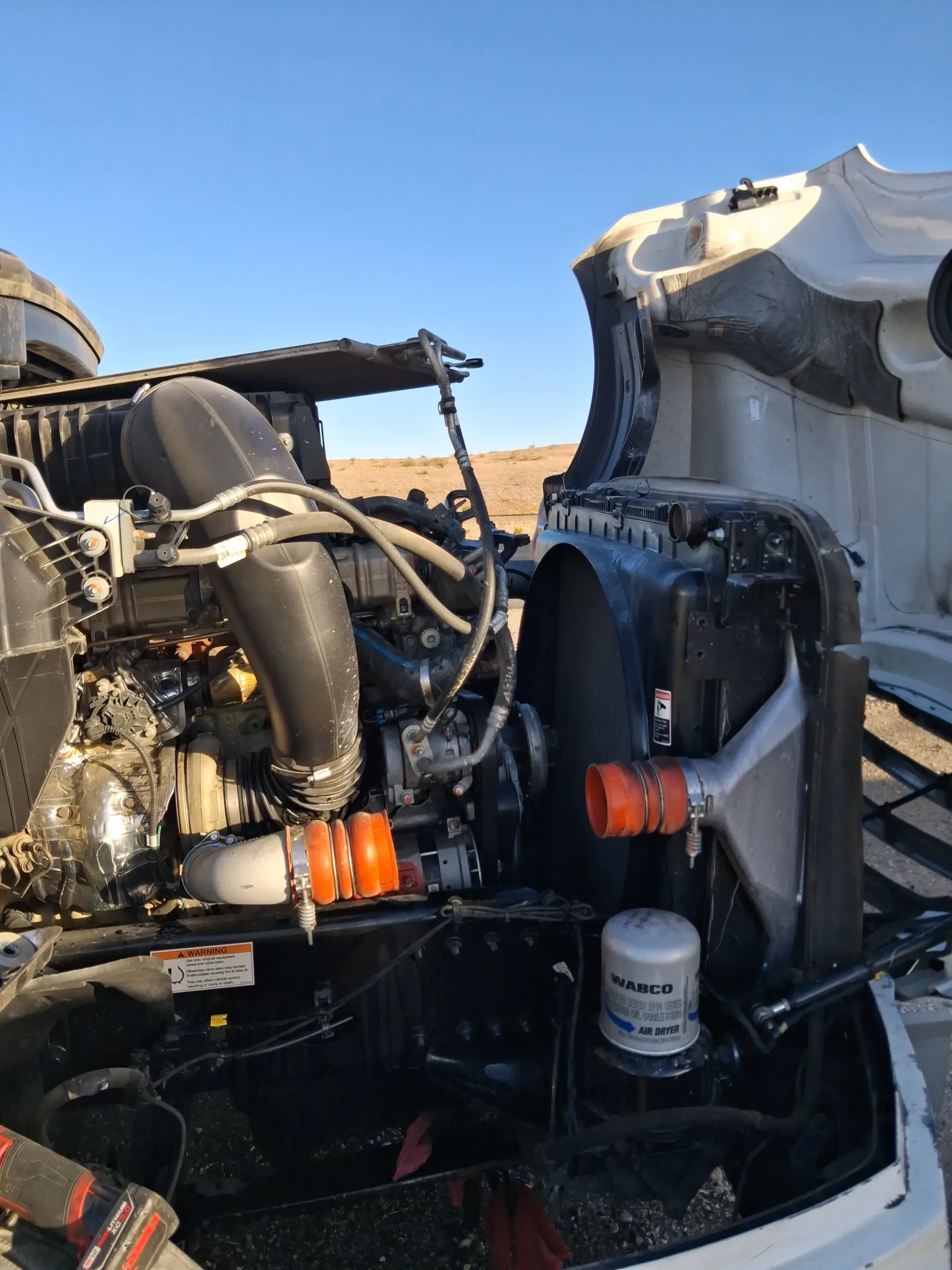
- Look at the dryer and its lines. Bendix says to check for chafed or broken air lines and for loose mounting bolts.
Ask one more question. Did you charge the system from an outside air source? Bendix says that air “did not pass through the drying bed,” so it can leave water behind.
Each air reservoir needs a drain valve that can be operated by hand. Source
What to Leave Alone
Draining is not a repair. It removes what is already in the tanks. It does not fix the cartridge that let it in.
Do not add alcohol to fight water. Bendix says not to inject alcohol, anti-freeze or other de-icing substances into or upstream of the air dryer. It says alcohol “reduces the effectiveness” of the dryer. Oregon’s manual describes alcohol evaporators, so ask a mechanic what your truck has.
Oregon’s manual covers wet brakes that could freeze. It says wet parking brakes can freeze and keep the vehicle from moving, so do not set them. For wet brakes, it says to use them lightly in a low gear to dry them out.
Do not chase a pressure drop by guessing. If the gauge is falling, that is a different problem. We cover it in Air Brake Pressure Loss on I-40: Leak or Compressor?.
When to Stop Driving
No rule says how much water in a tank is too much. What the rules do say is clear enough to act on.
- Low-air warning on: stop. Oregon’s manual says “stop and safely park your vehicle as soon as possible.”
- Drivers carry the safety call. 49 CFR 396.13 says a driver must “be satisfied that the motor vehicle is in safe operating condition” before driving.
- Heavy water or oil: do not run on it. The dryer exists to keep both out of the brake system. Park where it is safe, and call.
A truck parked safely costs you time. A brake failure costs far more. Weigh it that way.
Low-air warning on: stop and safely park as soon as possible. Source
How TRT Fixes Air Dryer Problems on the Road
TRT Road Service is mobile only. Our mechanics come to your breakdown location on I-40 or AZ-95. There is no shop drop-off.
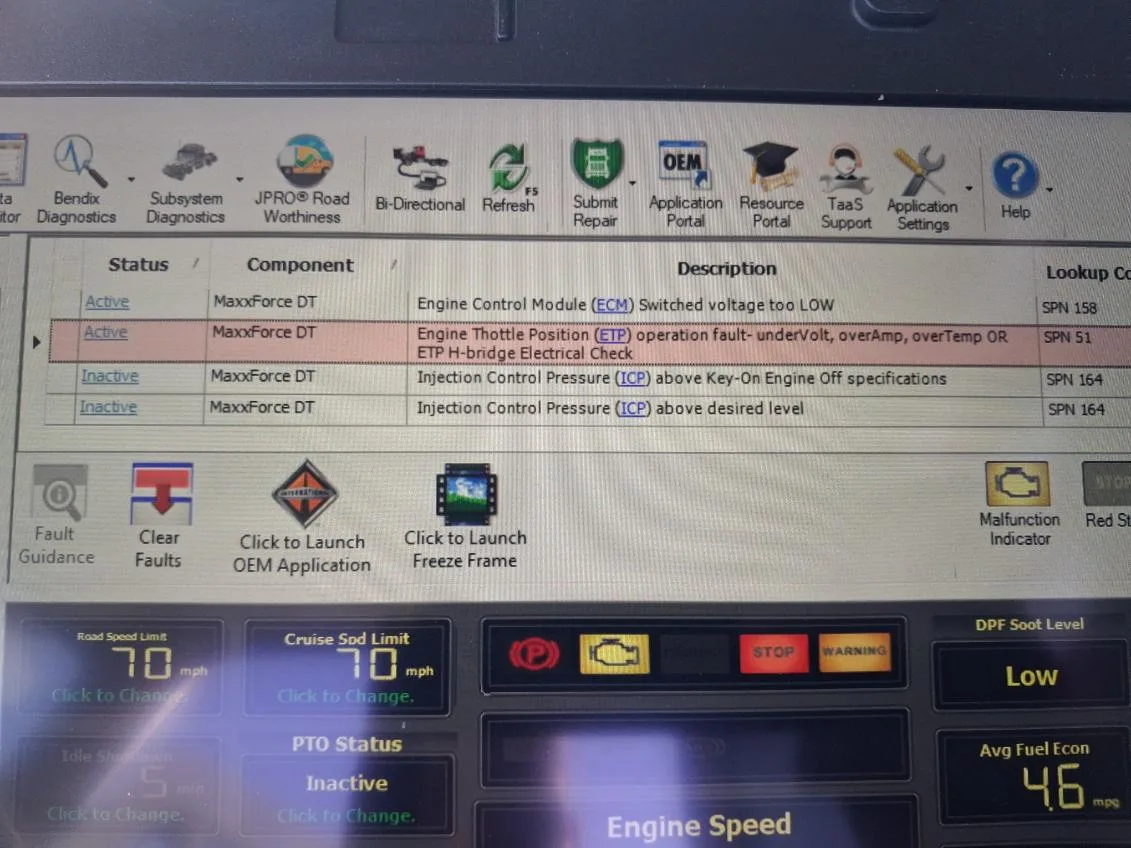
Air brakes are one of the systems we work on. We read fault codes on site with JPRO Professional dealer-level diagnostics. Our mobile truck air brake repair page covers the service in full.
Tennessee, the owner, personally handles most jobs.
TRT is mobile only: the mechanics come to your breakdown location; there is no shop drop-off.
Frequently Asked Questions
Quick answers to the questions people ask before they call or book.
Is a little moisture in the air tanks normal?
A little can be. Oregon’s manual says compressed air usually carries some water and oil. That is why tanks have drains. Bendix says more than traces of moisture means the cartridge should be changed sooner.
Does draining the tanks fix the problem?
No. Draining clears what is there now. If the cartridge is spent, the moisture comes back. Bendix’s chart names a spent cartridge, a dryer that is not purging and a leaking purge valve.
Can I keep driving if only the tanks have water?
No source sets a limit for moisture alone. The low-air warning is a clear stop. For everything else, 49 CFR 396.13 puts the safety call on you. If you are unsure, park and call.
Is this the same as an air leak?
No. A leak drops your pressure. A failed dryer lets water and oil in. The two can show up together, so see our pressure loss guide too.
Do you come to me, or do I bring the truck in?
We come to you. TRT is mobile only.
Call TRT Road Service
Do not wait on moisture in the brake lines. If your tanks show heavy water or oil, park safely and call. TRT is open 24 hours a day, 7 days a week. Call (928) 577-1496 or use the contact page to send the details. Tell us the truck, where you are on I-40 or AZ-95, and what came out of the drains.
TRT Road Service