Mobile diesel mechanic or a tow to a shop? How a truck driver decides at the roadside, what the federal rules say, and when a tow is the right call.
By TRT Road Service
Call a mobile mechanic when the fault can be read, diagnosed and fixed where the truck sits. Call a tow when the truck cannot be made safe to run or repair at the roadside. The fault decides it, not habit. A fault code read on site shows which side of the line you are on. Federal rules say what you may not do while you wait.
Make the spot safe before you decide anything
The first job is not the repair call. It is keeping people from hitting the truck. Under 49 CFR 392.22, a stopped commercial truck on the road or the shoulder must turn on its hazard flashers right away.
The same rule sets the time limit for warning devices. The driver must place them as soon as possible, but in any event within 10 minutes.
On a divided or one-way highway, one device goes at a distance of 200 feet and one at 100 feet, in the direction of approaching traffic. Both sit in the center of the lane or shoulder the truck occupies. A third goes on the traffic side, within 10 feet of the rear.
Different placement applies on two-lane roads. The rule also has exceptions, such as business or residential districts, curves and hills, and leaking flammable cargo. Read the full rule for your spot.
Do this first, then make your calls. It protects you and your load.
A stopped truck must turn on its hazard flashers right away, then place warning devices as soon as possible and in any event within 10 minutes. Source
What a roadside repair can settle
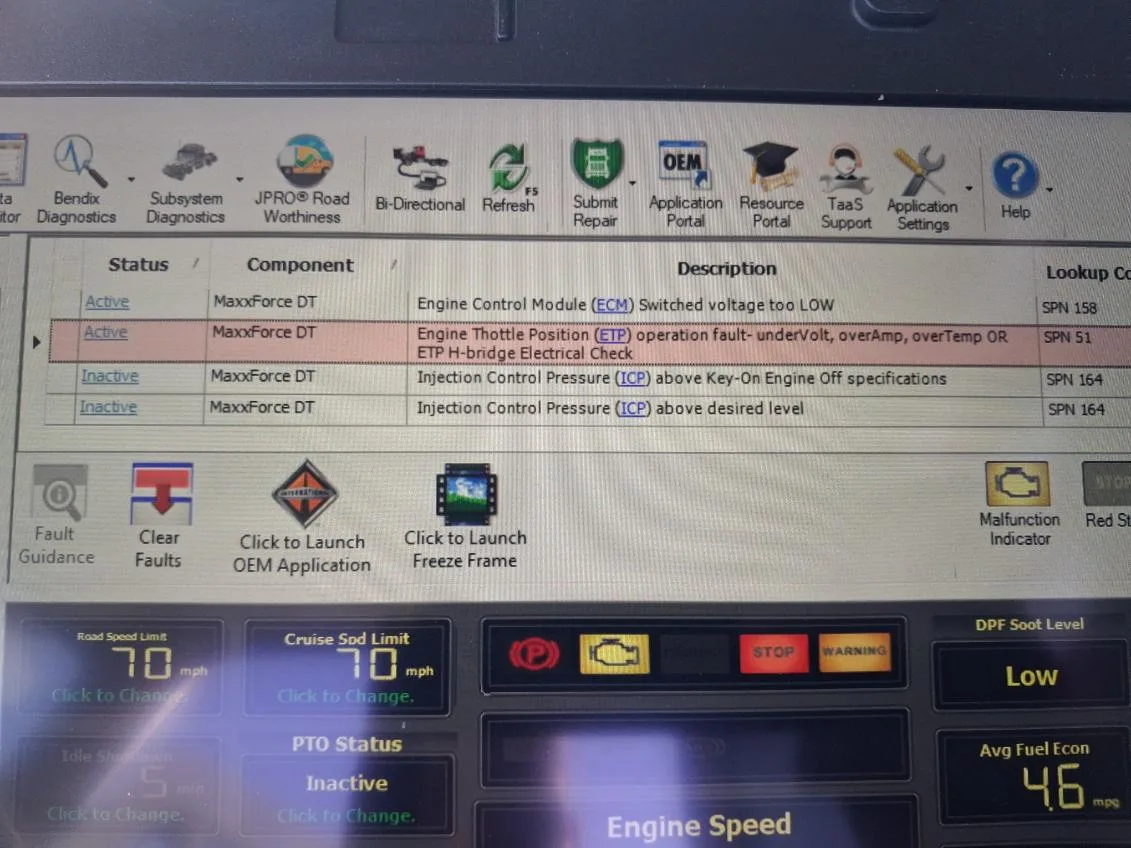
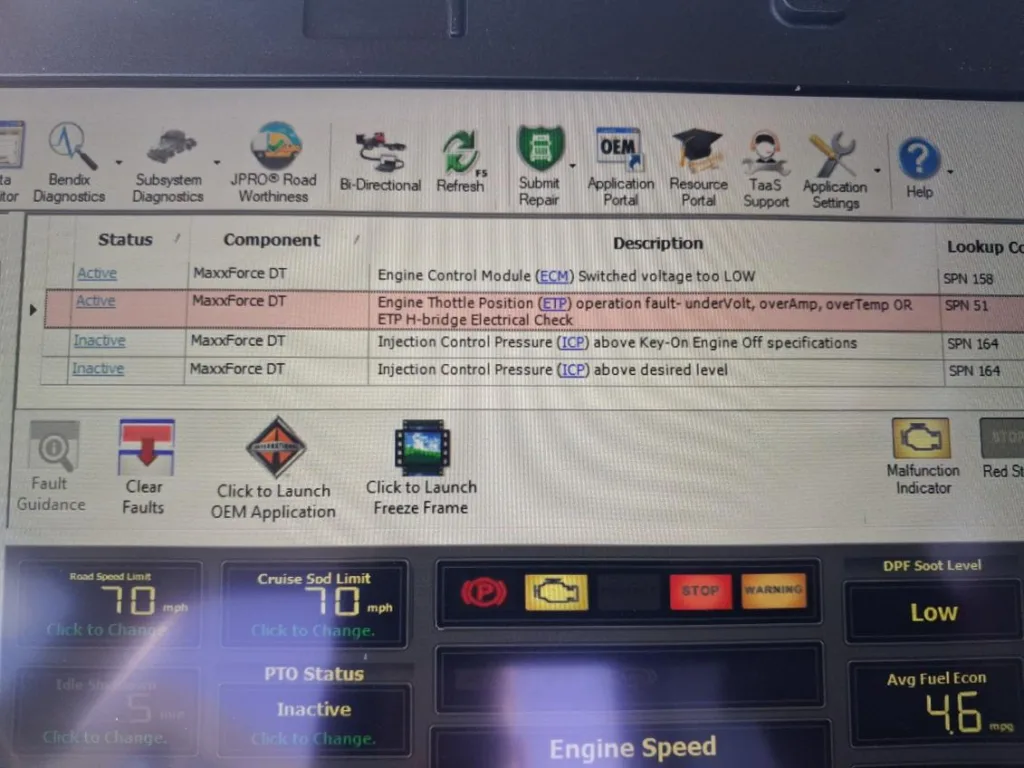
TRT Road Service is a mobile diesel repair and heavy-duty diagnostics business. The mechanics come to your breakdown location. Diagnostics start with JPRO Professional dealer-level fault code reading on site, so the repair decision rests on a real fault code and not a guess.
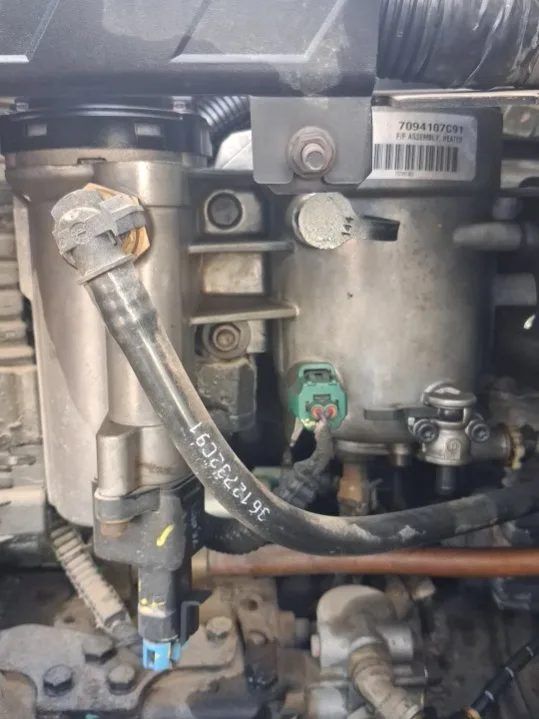
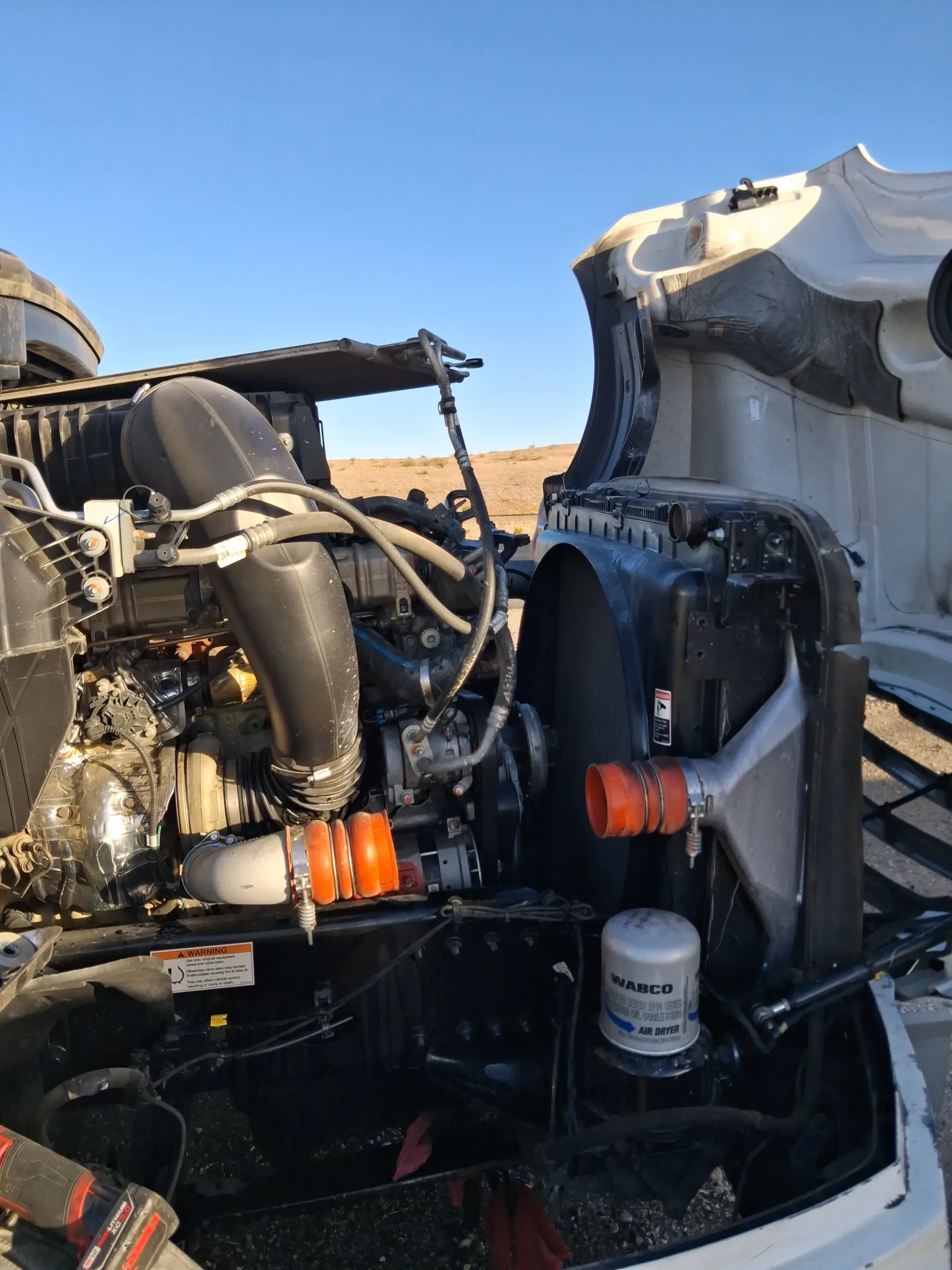
Many failures on a Class 8 truck sit in systems a mobile mechanic works on at the roadside. TRT’s work covers heavy-duty diesel engines, DPF and DEF systems, EGR, turbochargers, air brakes, alternators and starters, and fifth wheels. Engines include Cummins, Detroit, MaxxForce and PACCAR MX.
That list is the reason a diagnosis comes first. A derate, a no-start, a regen that will not finish or an air leak can look alike from the cab. Reading the codes sorts them. Some turn out to be a fix you can have done on the shoulder. See how mobile diesel repair works, and check the towns and routes TRT covers.
Mobile only: the mechanics come to your breakdown location. No shop, no drop-off.
What needs a tow instead
Some failures are not safe to fix or move under their own power. Here is where the sources are clear and where they are not.
The federal test for a truck that should not move
No rule lists every failure that needs a tow. The rules give a test instead. 49 CFR 392.7 bars driving a commercial truck unless the driver is satisfied that key parts are in good working order. Those parts include the service brakes, steering mechanism, tires, wheels and rims, and coupling devices.
A second rule backs it up. 49 CFR 396.7 says a truck may not be operated in a condition likely to cause an accident or a breakdown.
Say a failure touches one of those parts and you cannot make it sound where you stand. Then the truck is not going anywhere on its own. A tow is the right call.
Air brake warnings
An air system that will not hold pressure is a serious case. Federal rules require trucks to have a low air pressure warning for the driver. The rule does not say what to do when it comes on. The test above does.
If that warning stays on and the truck will not build air, do not drive on it. Have the leak or the compressor looked at where the truck sits. If the diagnosis finds damage that cannot be repaired roadside, tow it.
Be ready to hear “this one needs a shop”
TRT is mobile only. There is no shop and no drop-off. If a diagnosis shows a failure that cannot be fixed at the roadside, the right answer is a tow. That is the call to make.
Do not drive a failing truck to a shop
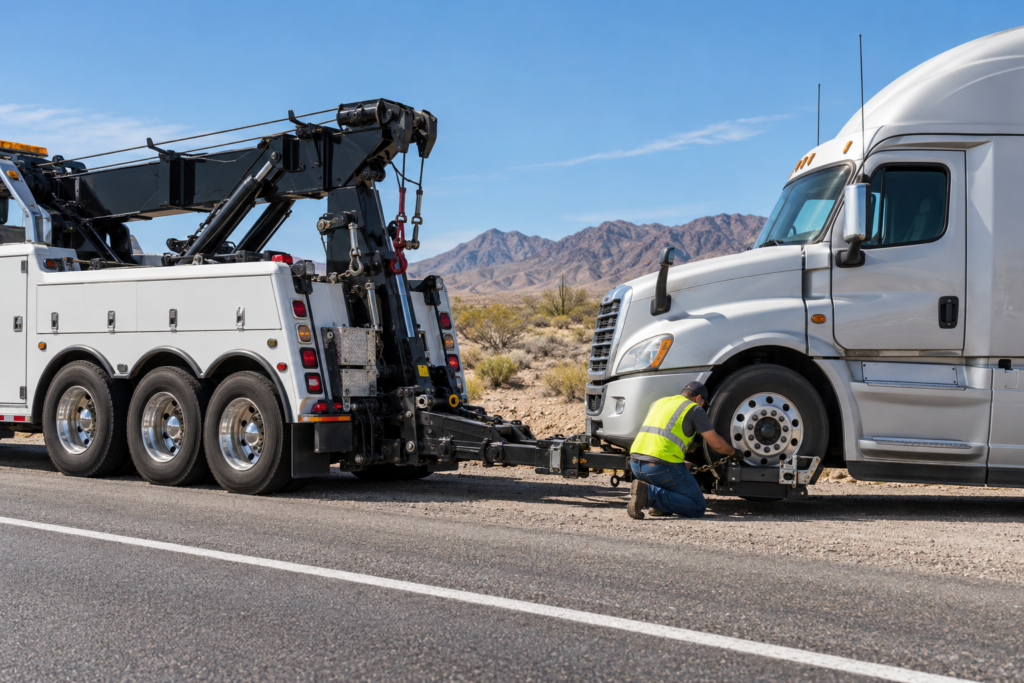
It is tempting to limp to the next exit. The rules are narrower than the temptation. A truck found in an unsafe condition on the highway may continue only to the nearest place where repairs can safely be made. That is allowed only if it is less hazardous to the public than leaving the truck where it is.
That is a high bar. It is not a general permit to keep driving. A shop is not a reason to move a truck that is likely to cause an accident.
Also remember the out-of-service rule. A truck placed out of service by an inspector may not be run until all repairs required by the notice are done. Settle the repair question before you roll.
A truck found unsafe on the highway may go only to the nearest place where repairs can safely be made, and only if that is less hazardous than staying. Source
Four questions to decide at the roadside
- Is the truck stopped safely? Flashers on, devices out. Nothing else matters until this is true.
- What is the fault? Get the code read. Do not pick tow or mechanic from the dash alone.
- Can that fault be fixed where the truck sits? If it is in the engine, aftertreatment, electrical or air systems TRT works on, a roadside repair is possible. If the diagnosis finds the truck unsafe to move and not repairable on the shoulder, the answer is no.
- Would driving it be more hazardous than staying? Under the federal rule, you may move it only if staying is worse. Even then, go only to the nearest safe place for repairs.
If the answers point to a roadside repair, call a mobile mechanic. If they point to a tow, call a tow. Do not call a tow first just because it is the number you know. Get the fault read before you commit the truck to a tow.
Frequently Asked Questions
Quick answers to the questions people ask before they call or book.
Can I limp the truck to the next exit?
Only in narrow cases. Federal rule 396.7 covers a truck found unsafe while being operated on the highway. It may continue “only to the nearest place where repairs can safely be effected.” That applies only if it is less hazardous to the public than leaving the truck on the highway. If you are unsure the truck is safe, do not move it.
Do I need the mechanic to see the truck before I decide?
No. Describe what the truck did and what the dash shows. The fault codes read on site give the real answer on whether it is a roadside fix.
What if the fix turns out to need a shop?
Then the truck needs a tow. TRT is mobile only, with no shop. A diagnosis is still worth having, because it tells the shop what to look at.
Does the order of calls matter?
Make the spot safe first. Then get the fault read. Decide on the tow or the repair from that.
When you are not sure which one you need
Most drivers are not sure at first. That is normal. The way to find out is a diagnosis, not a guess. Tennessee, the owner, personally handles most jobs. Tell us what the truck is doing and where it sits.
Open 24/7.
Call TRT Road Service
TRT Road Service is open 24/7 for mobile diesel repair on I-40 and AZ-95. Tell us where the truck is and what it is doing. Call (928) 577-1496 or use the contact page.
TRT Road Service