DPF regen failed on the road? Call TRT for DPF, DEF, SCR, derate, and fault-code support near I-40, AZ-95, and California route connections.
When a DPF regen fails on the road, the safest first move is to stop guessing and preserve the diagnostic evidence. A failed regen can be caused by soot load, DEF or SCR faults, sensor readings, wiring problems, exhaust temperature issues, engine faults, or a safety condition that prevents the truck from completing the cycle. (If your dash is showing an active derate countdown rather than a failed regen, start with what DEF and DPF derates actually mean mid-route.) TRT Road Service helps drivers and dispatchers sort through DPF, DEF, SCR, fault-code, and derate symptoms near I-40, AZ-95, Kingman, Needles, Bullhead City, Mohave Valley, and California route connections.
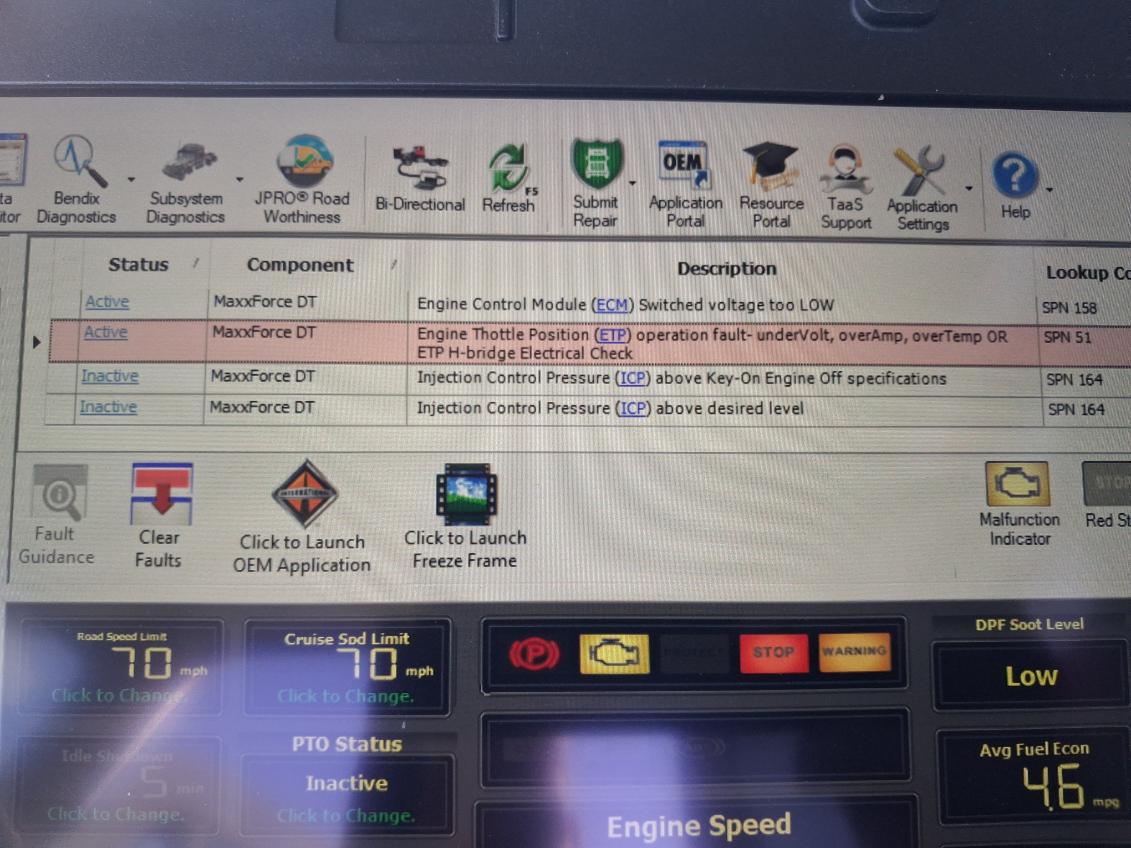
This guide explains what to do before calling, what a mobile diagnostic visit can and cannot solve, and how dispatch can make a better decision when a truck is stuck in a warning countdown or derate. If you already know you need mobile help, call TRT at (928) 577-1496.
A Failed DPF Regen Is a Symptom, Not a Complete Diagnosis
A failed DPF regen means the truck did not complete the aftertreatment cleaning event it needed. That does not automatically mean the DPF itself is the only problem. Modern aftertreatment systems depend on temperature, fuel dosing, sensors, DEF quality, SCR function, NOx readings, exhaust pressure, wiring, and engine operating conditions. One bad assumption can waste hours.
That is why the first question should not be, “Can someone force a regen?” The better question is, “Why did the regen fail, and is another regen safe or useful right now?”
Drivers often see one or more of these clues:
- parked regen requested but the cycle will not start
- regen starts and stops before completion
- soot-load warning keeps returning
- check engine light, emissions warning, or stop-engine warning
- DEF quality, DEF dosing, SCR, NOx, or aftertreatment messages
- speed derate, torque limit, or countdown warning
- truck idles but will not build the conditions needed for regen
- fault codes return after they are cleared
TRT’s DPF and DEF system repair page explains the broader service lane. For a breakdown that includes electrical symptoms, no-start complaints, charging problems, or wiring concerns, see heavy-duty diagnostics and electrical support.
What the Driver Should Do Before Calling
Before a mechanic is dispatched, capture the evidence. Do not clear codes just to see whether the warning goes away unless a qualified technician tells you to do it. Clearing information can make the next step harder to diagnose.
Send or gather:
- exact location, route, direction of travel, exit, mile marker, or GPS pin
- truck year, make, model, engine, and unit number if available
- active warning messages on the dash
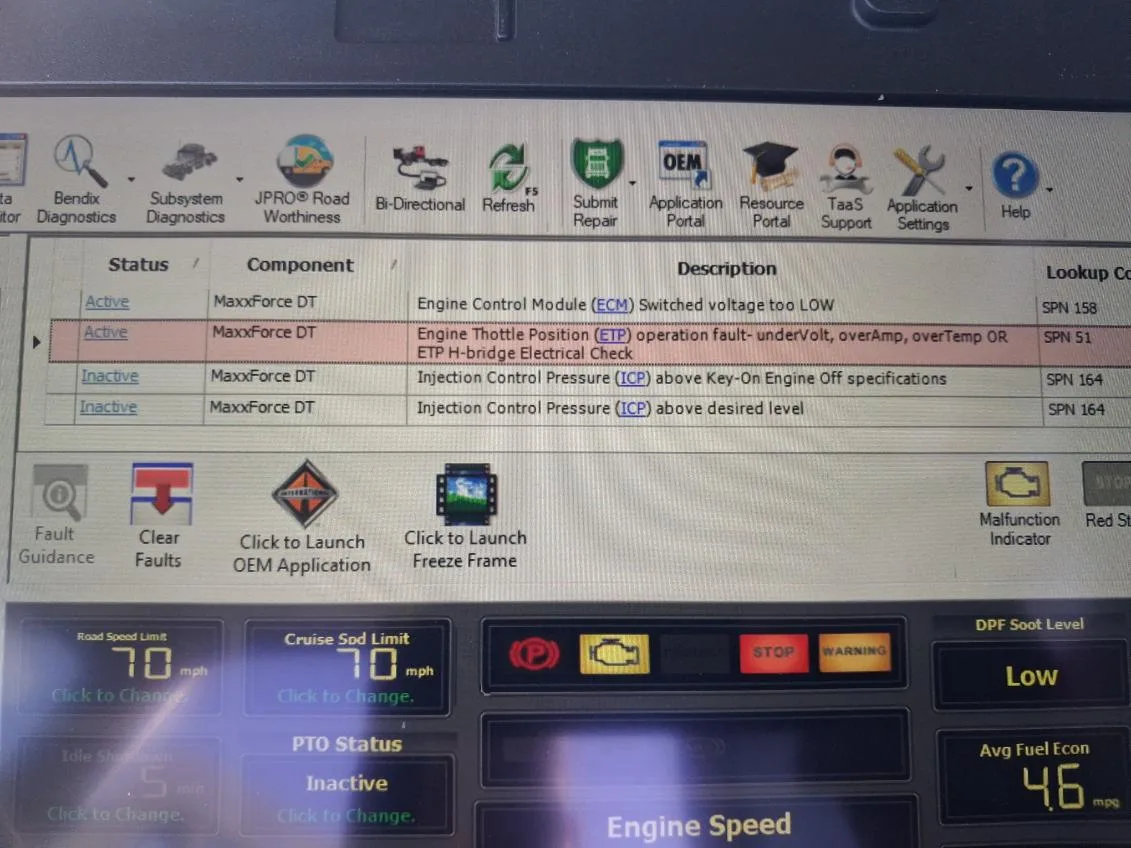
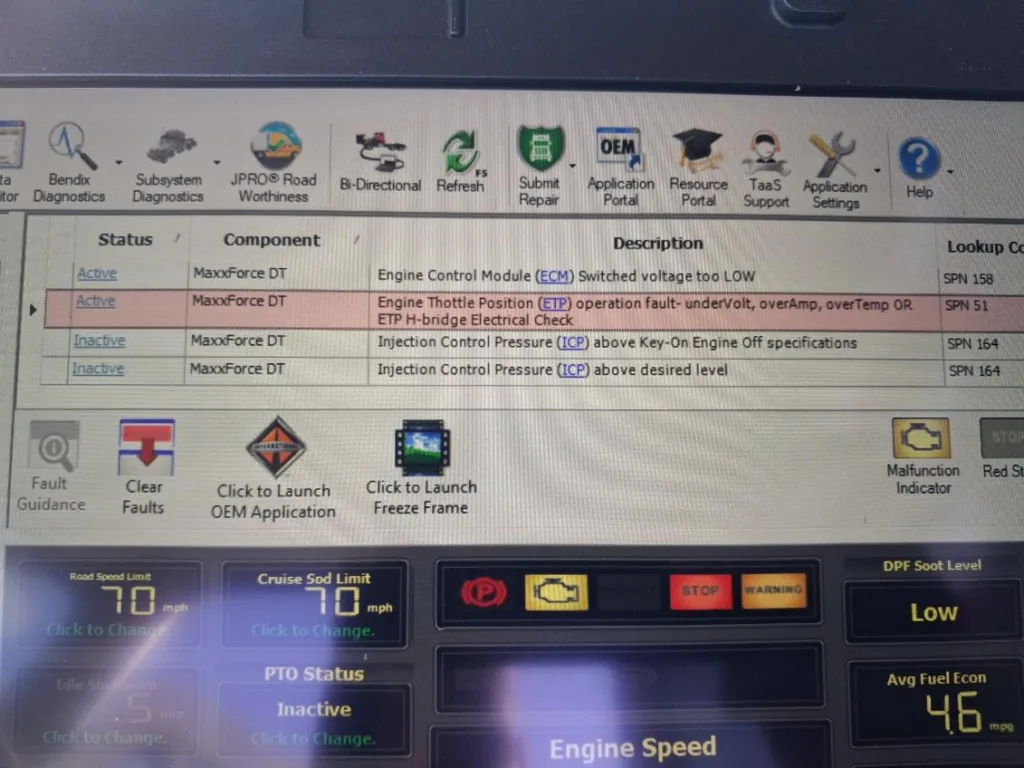
- photos of fault screens, DEF messages, soot-load indicators, and derate warnings
- whether the truck is in a countdown or already speed-limited
- whether the parked regen button is available, flashing, or ignored
- whether the truck will idle normally
- DEF level and any DEF quality warning
- recent repair history, including sensors, DEF pump, DPF cleaning, or exhaust work
- whether the truck is on a shoulder, ramp, yard, or truck-stop lot
That information helps dispatch decide whether mobile diagnostics are practical at the location. TRT is mobile-only, so the goal is to come to the truck when the situation is safe and the call fits mobile repair support. For exact service-area context, use the mobile truck repair service area page.
When a Forced Regen May Help
A forced regen may help when the truck’s fault pattern, soot load, temperatures, and operating conditions make it appropriate. In a practical roadside setting, the technician needs to understand why the truck requested or failed a regen before attempting another one.
A regen may be part of the answer when:
- the truck has a soot-load condition that still allows a controlled service procedure
- required temperatures and engine conditions can be met safely
- the fault pattern does not point to a hard failure that will stop the cycle again
- the truck is in a safe location with enough time and access
- diagnostics support the attempt
Even then, a forced regen is not a guarantee. If the underlying issue is a sensor, wiring problem, DEF/SCR fault, exhaust leak, failed component, or excessive soot/ash condition, another regen may fail or may not be appropriate.
When a Failed Regen Points to a Bigger Repair
Some aftertreatment problems are not roadside regen problems. They are repair-planning problems. A mobile technician can still help by reading the evidence and helping the driver or dispatcher decide the next step.
Watch for warning signs that a failed regen may need more than another attempt:
- repeated failed regens over several days
- DEF quality faults or SCR/NOx faults at the same time
- exhaust temperature sensor faults
- differential pressure faults
- wiring or communication faults
- active engine performance faults
- coolant, boost, EGR, or turbo symptoms
- soot-load warnings that escalate quickly after clearing
- derate returns immediately after a short drive
If the diagnostic picture points to parts or shop-level follow-up, the value of mobile service is still real. The driver gets a clearer path instead of guessing, towing blindly, or sitting in a truck-stop queue without knowing what failed.
What Dispatch Should Ask Before Authorizing Service
Dispatchers need enough information to protect the driver, the load, and the repair budget. A DPF regen failure can look urgent, but authorizing the wrong work can cost more than the delay itself.
Ask these questions before deciding:
- Is the truck in a safe service location?
- Is the truck fully derated or still able to move?
- Are there active DEF, SCR, NOx, or pressure-related messages?
- Has anyone cleared codes already?
- Did the regen fail once, or has this been recurring?
- Is the load time-sensitive or temperature-sensitive?
- Is the truck near I-40, AZ-95, Kingman, Needles, Bullhead City, Fort Mohave, Mohave Valley, Parker, or Barstow route traffic?
- Can the driver send photos of the dash and fault messages?
For a broader breakdown process, see the existing TRT guide to emergency roadside diesel repair on I-40. If the issue is tied to official California emissions compliance questions, use TRT’s California Clean Truck Check support page for repair-support positioning and CARB resource links.
What TRT Can Help With
TRT Road Service supports DPF, DEF, SCR, derate, and heavy-duty diagnostic calls where mobile dispatch is practical. Depending on the truck, location, symptoms, and safety conditions, support may include:
- fault-code review and diagnostic intake
- DPF, DEF, SCR, NOx, soot-load, and regen symptom review
- derate troubleshooting
- forced regen support when diagnostics and conditions make it appropriate
- electrical and wiring checks related to aftertreatment symptoms
- repair planning when parts or shop-level work may be needed
- driver and dispatcher guidance on the practical next step
The important line is honesty: not every failed regen can be fixed roadside. A good call still prevents wasted time because it separates “try a controlled diagnostic path” from “stop chasing the wrong repair.”
What Not to Do After a Failed Regen
Avoid these mistakes:
- do not keep forcing repeated regens without understanding why they fail
- do not clear codes before saving photos or diagnostic information
- do not ignore DEF quality or SCR/NOx warnings because the soot message seems louder
- do not keep driving through escalating derate warnings without a plan
- do not assume a truck-stop oil change lane can solve an aftertreatment diagnostic fault
- do not promise a driver that a regen will clear the problem until the fault pattern is reviewed
For mobile support, call TRT Road Service or use the contact page to send truck details, location, warning messages, fault codes, photos, and dispatch notes.
TRT Road Service